
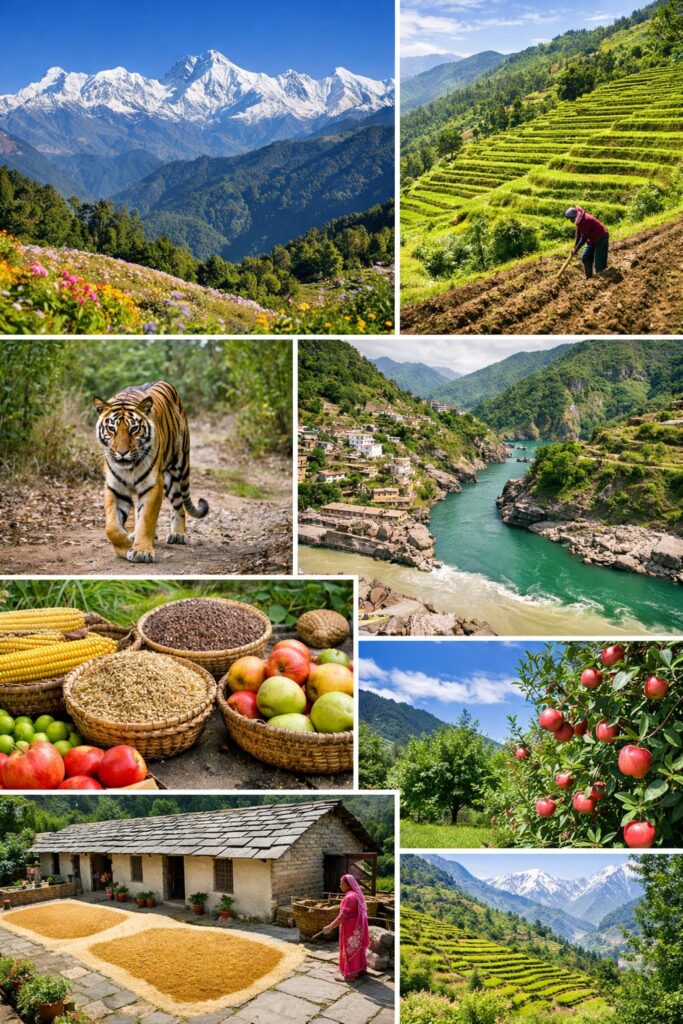
Uttarakhand, also known as Devbhoomi (Land of Gods), is one of the most naturally blessed states in India. Snow-capped Himalayan peaks, green valleys, flowing rivers, and fertile farmlands define its landscape. For centuries, the people of Uttarakhand have lived in close harmony with nature, and agriculture has remained a core part of their eco-friendly lifestyle.
Natural Beauty of Uttarakhand
Uttarakhand offers a rich variety of landscapes, including mountains, forests, rivers, and alpine meadows. These natural features support biodiversity and sustain agriculture across the state.
Himalayan Mountains
The majestic Himalayas dominate Uttarakhand’s geography. These mountains enhance the state’s scenic beauty and play a crucial role in regulating climate and water availability. Snowmelt from the Himalayas feeds rivers and supports farming in the plains and hills.
Forests and Wildlife
Nearly half of Uttarakhand is covered with dense forests of pine, oak, rhododendron, and deodar. These forests shelter rich wildlife and support ecological balance. Protected areas such as Jim Corbett National Park help conserve endangered species and promote eco-tourism.
Rivers and Water Resources
Uttarakhand is often called the “Land of the Ganges” because it is the birthplace of sacred rivers like the Ganga and the Yamuna. These rivers provide water for agriculture, drinking, and religious activities, making them lifelines for northern India.
Agriculture of Uttarakhand
Agriculture supports most rural households in Uttarakhand, especially in hilly regions. Farmers rely on traditional methods that suit the mountain environment and preserve natural resources.
Terrace Farming
Farmers practice terrace farming to adapt to steep slopes. This method reduces soil erosion, conserves water, and improves crop productivity. It reflects the deep understanding locals have of their natural surroundings.
Major Crops of Uttarakhand
Farmers grow crops based on altitude and climate conditions. Major crops include:
Rice
Wheat
Maize
Mandua (Finger Millet)
Jhangora (Barnyard Millet)
Millets play a vital role because they are nutritious, climate-resilient, and ideal for mountain farming.
Fruits and Organic Farming
Uttarakhand also produces fruits such as apples, peaches, apricots, and plums. In recent years, organic farming has gained popularity. Farmers now reduce chemical use, protect soil fertility, and produce healthier food.
Sustainable Living and Future Growth
The strong link between nature and agriculture promotes sustainable living in Uttarakhand. Traditional farming methods, natural fertilizers, and forest conservation help maintain ecological balance. Today, both the government and local communities focus on eco-friendly farming, agri-tourism, and self-reliant villages.
Conclusion
Nature and agriculture in Uttarakhand depend on each other. Nature provides land, water, and climate, while agriculture sustains livelihoods and preserves cultural heritage. Protecting this balance is essential for the future of the state and serves as an inspiring model for sustainable development in India.